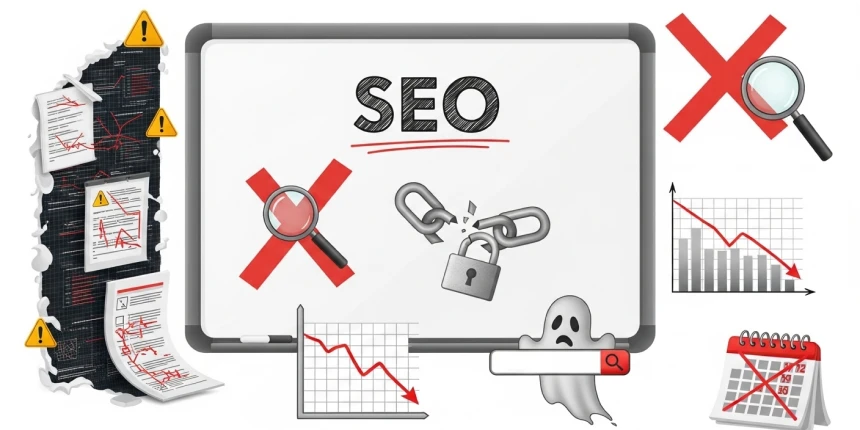


Are you losing Google rankings even after investing time and effort into your website? This problem affects many businesses. The issue often sits behind the scenes, not in content or keywords.
Technical errors prevent search engines from crawling, understanding and trusting your website. When Google faces these barriers, rankings drop and traffic slows. This gap leads to frustration and wasted resources. Businesses publish content, update pages and invest in SEO but fail to see progress.
Technical Search Engine Optimization solves this problem. It removes hidden issues, strengthens site health and helps search engines rank your website with confidence.
Key Highlights:
- Technical SEO helps search engines access and index your site
- Site speed and mobile setup affect rankings
- Clean structure improves user experience and trust
- Fixing errors supports long term organic growth
For Norwegian companies, technical search engine optimization supports local reach, language targeting and stable rankings. SEOStrategi helps businesses build this strong base for lasting visibility.
In this blog, you’ll learn what technical search engine optimization is and why it is important. Its components and how technical SEO works.
What is Technical Search Engine Optimization?
Technical SEO focuses on the system behind your website. It ensures search engines can access, understand and rank your pages without friction.
Unlike content SEO, technical SEO works on:
- Site performance
- Code structure
- Page accessibility
- Index control
When these areas stay healthy, your website performs better across search results.
Why Technical SEO is Important for Businesses?
Users expect websites to load fast, stay secure and work well on mobile devices. Search engines measure these signals when ranking pages. If a website fails to meet these expectations, it struggles to gain visibility, no matter how strong the content looks.
Technical SEO helps websites meet these standards. It builds a solid foundation that supports content, design and marketing efforts.
Improves Visibility in Local Search Results
Local search plays a key role for service based and location focused businesses. Search engines favor websites that load fast, follow a clean structure and are easy to crawl. These signals help a business appear in local results and map listings. Technical SEO ensures search engines connect your website with the right audience.
Supports Multilingual and Regional Websites
Many businesses use more than one language on their websites. Without a proper technical setup, search engines struggle to understand which version to rank. This often leads to duplicate content issues and poor visibility. Technical SEO uses correct structure and language signals to guide search engines. Each version of the site appears in the right search results without confusion.
Protects Rankings During Website Changes
Website updates and redesigns often cause ranking drops. Pages move, URLs change and search engines lose track of important content. Without technical planning, traffic can decline fast. Technical SEO manages redirects, indexing rules and crawl paths. This protects rankings and keeps search visibility during changes.
Builds Trust With Users and Search Engines
Trust influences both user behavior and rankings. Secure website, stable layouts and smooth navigation encourage visitors to stay longer. Search engines treat these signals as indicators of quality. Technical SEO improves security, page stability, and performance. This builds confidence with users and strengthens search engine trust.
Supports Long Term Growth
Search performance depends on consistency. Technical health keeps a website prepared for updates, new content and algorithm changes. A strong technical base allows growth without repeated setbacks. Without technical SEO, even strong brands lose traffic. With it, businesses gain stability, visibility and long term search performance.
How Search Engines Crawl and Index Websites?
Search engines use bots to scan websites. These bots follow links and read page code. If bots face issues, pages remain invisible. The process works in three steps:
- Crawling: Bots visit pages
- Indexing: Pages get stored in Google’s system
- Ranking: Pages compete for search results
Technical SEO removes obstacles at each step.
Components of Technical SEO
Technical SEO includes several important areas. Each one ensures that search engines can crawl, understand and rank your website. Ignoring any component can limit your visibility online.
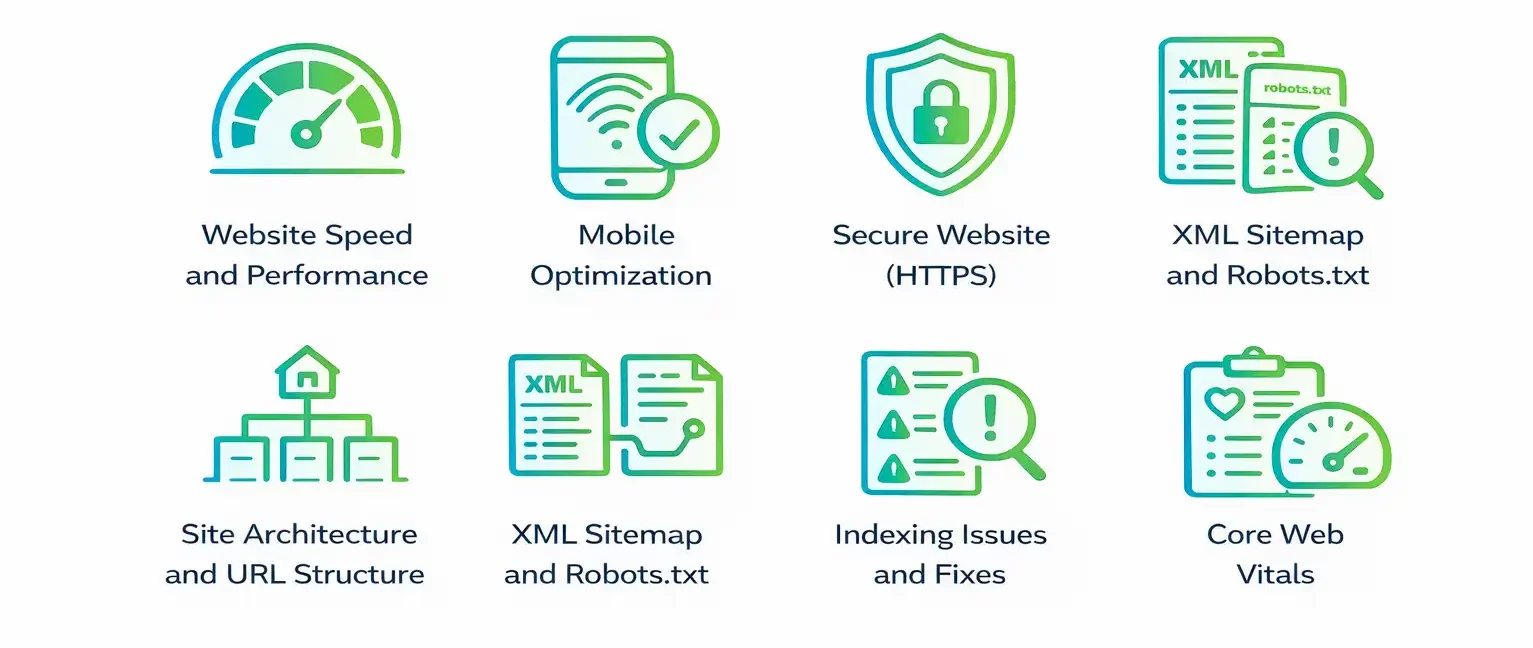
Website Speed and Performance
Speed plays an important role in user experience and rankings. Slow pages increase bounce rates and reduce conversions.
What Affects Speed?
- Large images
- Heavy scripts
- Poor hosting
- No caching
How to improve speed?
- Compress images
- Use modern formats
- Minimize code
- Choose reliable hosting
Mobile Optimization
Mobile users access websites on mobile devices. Search engines prioritize mobile responsive sites. Important steps include:
- Responsive design for all screen sizes
- Easy to read text
- Clickable buttons and clear navigation
- Quick mobile loading speed
A mobile optimized site improves usability and search performance. It also affects how long visitors stay on your site and how easily they complete actions like filling forms, making purchases or contacting your business.
Pages that are hard to navigate or slow on mobile devices lead to higher bounce rates, lower engagement and missed opportunities. Ensuring a seamless mobile experience not only improves rankings but also increases conversions and customer satisfaction.
Secure Website (HTTPS)
Security affects both rankings and user trust. Google favors websites with HTTPS.
HTTPS:
- Protects user data
- Shows trust signals
- Prevents warnings in browsers
If your site still runs on HTTP, you risk losing traffic and credibility.
Site Architecture and URL Structure
A clear site structure helps search engines understand how your pages connect. It also makes navigation easier for users. When content follows a logical path, both search engines and visitors reach important pages without confusion.
Good site architecture spreads link value across the website and prevents important pages from getting buried too deep.
Best practices for Site Structure:
- Keep URLs short and descriptive
- Use clear folder names that reflect page topics
- Avoid random numbers, symbols or unnecessary parameters
- Maintain a logical hierarchy from main pages to subpages
Example URL:
/seo-services/technical-seo/
This structure tells search engines what the page covers before they even crawl it.
XML Sitemap and Robots.txt
Search engines need clear guidance to crawl your website the right way. Sitemaps and robots.txt files serve as direct instructions that help search engines understand which pages matter and which ones to ignore.
XML Sitemap
XML sitemaps help search engines find and index important pages by listing important URLs in one place. They ensure new and updated content gets discovered faster.
Robots.txt
Robots.txt controls which parts of a website search engines can crawl. It prevents private, duplicate or low value pages from appearing in search results.
Together, these files guide search engines and keep crawling focused on the right pages.
Indexing Issues and Fixes
A search engine can only rank pages that they successfully index. Some pages fail to appear on Google due to indexing problems.
Common issues include:
- Noindex tags
- Duplicate content
- Blocked pages
- Thin pages
Use Google Search Console to track indexing status and fix errors.
Duplicate Content Management
Duplicate content makes it hard for search engines to decide which page to rank. When multiple versions of the same content exist, ranking signals get divided and search visibility drops.
Common causes
- URL variations
- Printer friendly pages
- HTTP and HTTPS versions
Effective Solutions
- Use canonical tags to mark the main page
- Redirect duplicate URLs to one version
- Maintain clear and consistent URL rules
Proper duplicate content management helps search engines focus on the correct page and strengthens overall rankings.
Structured Data and Schema Markup
Structured data adds extra meaning to your content. It helps search engines understand what each page represents, not only what words it contains. This makes it easier for search engines to display your content in rich formats.
Schema markup supports:
- Business information
- Reviews and ratings
- Products and services
- FAQs and events
Using schema increases the chance of rich results, improves visibility and helps your pages stand out on search listings.
Core Web Vitals
Core Web Vitals measure how users experience your website. Google uses these signals to judge page quality and ranking potential. They focus on three main areas:
Largest Contentful Point (LCP)
How fast does the main content load? It shows when users can actually see and start reading the page.
First Input Delay (FID)
How quickly the page responds to user actions. It measures how fast buttons, links and forms react when clicked.
Cumulative Layout Shift (CLS)
How stable the layout stays during loading. It tracks whether elements move around and disrupt the user experience.
How Technical SEO Works?
Technical search engine optimization works by making your website easy for search engines to examine, recognize and trust. It removes hidden limitations that block crawling, indexing and ranking.
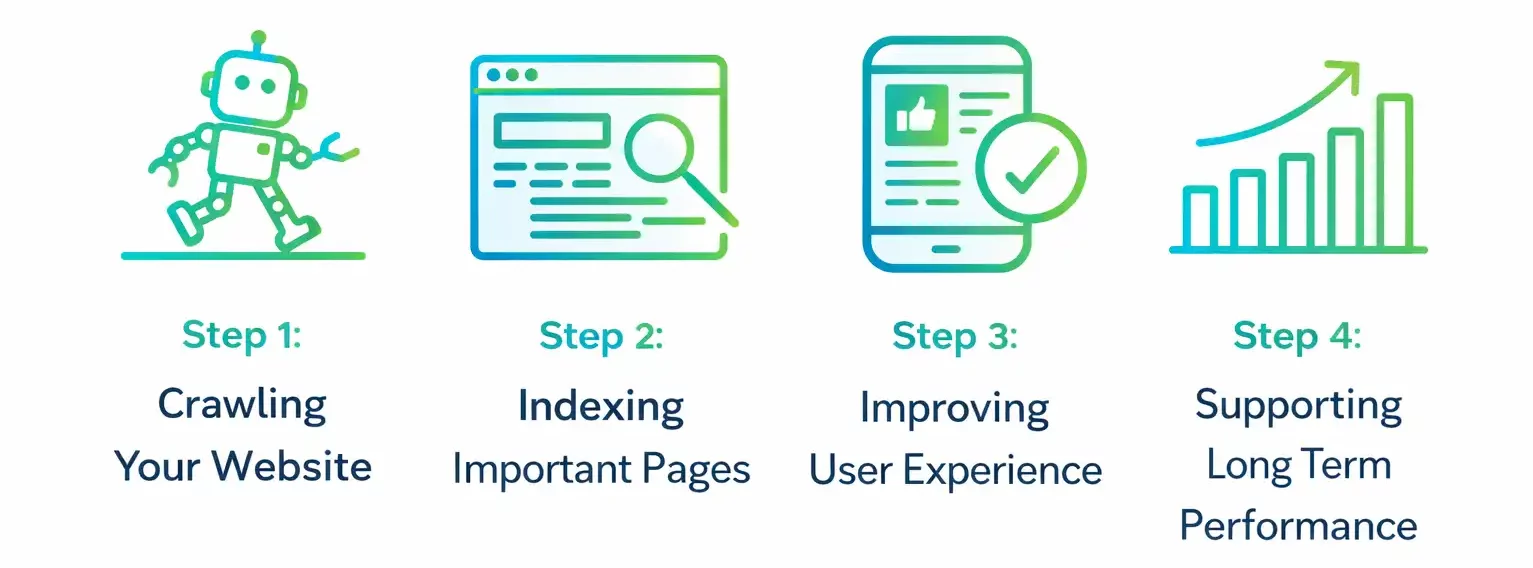
Step 1: Crawling Your Website
Search engines visit your website using bots. These bots scan pages, follow links and gather information. If they face broken links, blocked pages or slow load times, they skip content or reduce crawl activity.
Step 2: Indexing Important Pages
After crawling, search engines determine which pages to keep in their index. Technical SEO ensures that only valuable pages get indexed. This consists of managing sitemaps, solving crawl errors, setting canonical tags and removing duplicate content.
Step 3: Improving User Experience
Technical search engine optimization also improves how users interact with your website. Fast pages, mobile responsive design, stable layouts and secure connections keep users engaged. Search engines track these signals and use them to judge web page quality.
Step 4: Supporting Long Term Performance
Technical SEO is not a one time venture. Regular checks help to detect new issues, protect rankings and keep your website aligned with search engine updates.
It builds a reliable system where search engines like Google and users can move through your website without difficulty. This leads to stronger rankings and stable organic growth.
How Often Should You Audit Technical SEO?
Technical SEO requires ongoing care. Websites change often, which creates new issues. A basic rule:
- Small sites: Every 6 months
- Large sites: Every 3 months
- After redesigns: Immediately
Consistent checks protect rankings and traffic.
Tools Used for Technical SEO
Technical SEO relies on data, not guesswork. Professionals use tools to identify hidden issues that affect crawling, indexing, speed and user experience.
Some of the most commonly used tools include:
- Google Search Console: Tracks indexing status, crawl errors and performance.
- Google PageSpeed Insights: Measures page speed and Core Web Vitals.
- Screaming Fog: Scans websites to find broken links, redirects and duplicates.
- Ahrefs or Semrush: Audit technical health and monitor overall site performance.
These tools provide clear insights that help to prioritize fixes and improve website performance step by step.
Closing Thoughts
Technical SEO often feels complex, but it builds the strongest base for growth. I have seen content and links perform better when technical health stays strong. I believe businesses that invest in this area gain stability, trust and long term rankings. Ignoring technical SEO limits results, no matter how good the strategy looks on paper.

With over 8 years of hands-on experience in Search Engine Optimization (SEO), Zaryab Khan is a seasoned professional dedicated to enhancing online visibility and driving organic growth for businesses worldwide. Holding a Bachelor of Science in Computer Software Engineering from National Textile University, Zaryab combines technical proficiency with strategic insight to deliver measurable SEO results.

At SEOstrategi, we are your growth partners, focused on helping your business succeed with tailored strategies, expert support, and a commitment to increasing visibility, traffic, and conversions in Norway.