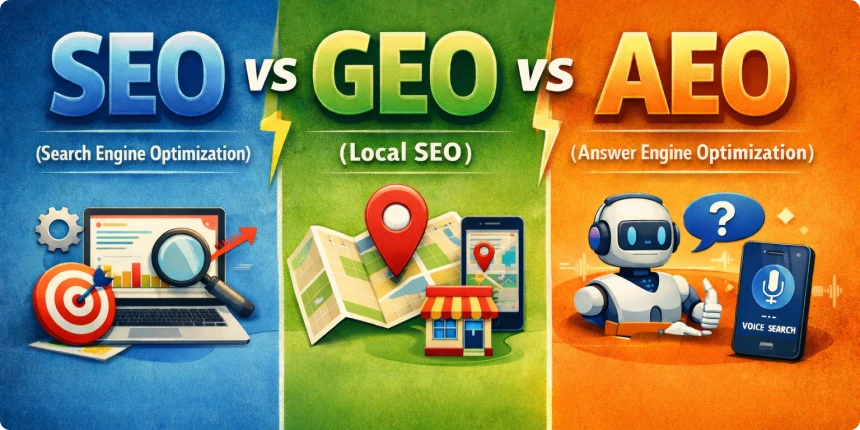


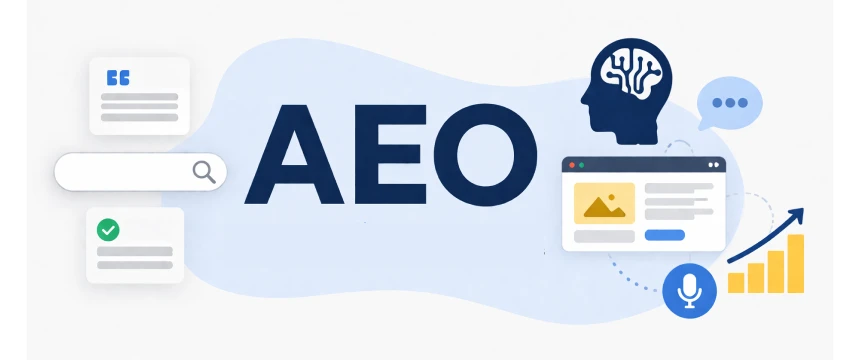
AEO (Answer Engine Optimization) is the process of optimizing content so AI tools can use it as a direct answer to user questions.
Think about the last time you searched for something important. Did you open Google and scroll through many links? Or did you type your question into ChatGPT and read one direct answer?
More people now choose the second option. And when they do, they do not see a list of results. They see one clear answer. There are no ten links to compare. No scrolling. Just one result. One source. And if that source is not your business, it is your competitor.
That is what AEO is about. AEO is not about ranking pages. It is about becoming the answer. Today, users expect instant answers, and AEO helps your business become that answer.
Key Takeaways
- AEO means Answer Engine Optimization. It helps your content become the direct answer AI tools give
- According to Gartner, up to 25% of search traffic will move to AI tools by 2026.
- ChatGPT reached 800 million weekly users by October 2025, and many do not visit websites
- AEO focuses on being cited as a source, not just ranking
- AEO works together with SEO, not as a replacement
- Norwegian businesses still have time to act early and gain an advantage
- Key platforms include ChatGPT, Perplexity, Google AI Overviews, Gemini, and Bing Copilot.
This guide reflects how AEO works in 2026, based on real AI search behavior and current trends.
What is AEO in simple terms?
AEO stands for Answer Engine Optimization. It helps your content become the direct answer AI tools show users instead of just a link. These tools include ChatGPT, Perplexity, Google AI Overviews, and voice assistants.
Traditional SEO works in a different way. It focuses on ranking your page in search results. Users see a list of links and choose one to click. AEO works one step ahead.
It focuses on becoming the answer itself. The AI takes your content and shows it directly to the user.
The Key Difference
| SEO | AEO |
| Focuses on ranking in search results | Focuses on becoming the direct answer |
| Works on Google and Bing | Works on ChatGPT, Perplexity, AI tools, and voice assistants |
| Users click on links | Users read answers directly |
| Success comes from clicks and rankings | Success comes from citations and mentions |
| Content uses keywords | Content answers questions clearly |
AEO helps your content get selected and displayed as the direct answer in AI tools instead of requiring users to click a link.
Why AEO Deserves Its Own Strategy
Some people think AEO is just another name for SEO. That is not quite right.
Yes, some techniques are similar. But the goal is different. And that changes how you write.
In SEO, you focus on keywords. You ask, “Which keyword do I want to rank for?” Then you try to include that keyword in your content.
In AEO, you think in a different way. You ask, “What question is my customer asking right now?” Then you answer that question in a clear and simple way.
The goal is to give a direct answer that AI tools can understand and trust.
A Simple Example
Here is how this difference looks in real content.
Without AEO — typical product page
“We offer premium accounting services in Oslo with over 20 years of experience. Our certified team handles everything from tax planning to bookkeeping and financial reporting. Contact us to learn more.”
This sounds fine. But it does not answer a clear question. So AI tools will not use it.
With AEO — same content, better structure
“What accounting services do small businesses in Oslo need?”
“Small businesses in Oslo usually need bookkeeping, VAT reporting, and annual tax filing. A local accountant who understands Norwegian tax rules can save time and reduce mistakes. Many firms also offer support in both Norwegian and English.”
The business is the same. The expertise is the same. But now there is a clear question, a direct answer in two sentences, and enough specificity for an AI tool to trust it and use it.
That is AEO in practice. Not a new set of keywords. A different way of thinking about what your content is actually doing.
Why Is AEO Growing So Fast?
AEO is growing because users now prefer instant answers over browsing multiple websites.
Here are three main reasons behind this shift.
1. Zero click searches are now common
Many people search but do not click any websites. In Europe, almost 60% of searches end without a click. Out of every 1,000 searches, only 374 lead to an independent website, according to SparkToro and Datos. Bain and Company shows a similar trend worldwide.
Users get answers directly on the search page. These answers come from featured snippets, knowledge panels, and AI Overviews. If your content is not part of that answer, people will not see you.
2. AI tools are now the first place people go
More people start their research with AI tools. ChatGPT reached 800 million weekly users by October 2025, based on OpenAI data. Other tools like Perplexity, Google AI Mode, and Gemini are also growing fast.
People use these platforms to compare products, explore options, and make decisions. Many do this before visiting any website. A study from McKinsey shows that 44% of users now rely on AI as their main source of information.
3. Search traffic is shifting to AI
This change will continue to grow. Gartner predicts that 25% of traditional search traffic will move to AI tools by 2026. This means fewer people will start their journey on Google. More will begin inside AI platforms. For Norwegian businesses, this changes where customers find you.
How Do AI Tools Decide What to Show?
This is the most important question. When you understand this, AEO becomes much easier. AI tools like ChatGPT and Google AI Overviews do not rank pages in the usual way. Instead, they read content, understand it, and then select the best parts to show as an answer. They look for sources that feel clear, useful, and trustworthy.
Here are the main things they focus on:
- Structured formatting
- Clear and direct answers
- Mentions on trusted third party websites
- Accurate and updated information
- Strong E-E-A-T signals
Structured Content
AI tools prefer content that is easy to read and well organized. Use headings, bullet points, tables, and FAQ sections. This structure helps AI find and extract answers quickly. Large blocks of text are harder to understand, so they often get ignored.
Direct Answers Near the Top
AI tools look at the beginning of your content first. Google AI Overviews often pull from the first 120 to 150 words of a page. So your answer should appear early. Give a clear answer first, then add more details below.
Third Party Mentions and Citations
AI tools trust external sources. A 2025 Avenue Z study shows that 75% of AI shopping results come from third party platforms. In the beauty category, this rises to 98% for ChatGPT.
This means your brand should appear on review sites, media platforms, and industry blogs. These mentions increase trust and visibility.
E-E-A-T Signals
AI tools look for real expertise. They prefer content created by people with knowledge and experience. Google calls this E-E-A-T. It stands for Experience, Expertise, Authority, and Trust. When your content shows these qualities, it performs better.
Schema Markup (Structured Data)
Schema helps AI understand your content. It is code that explains what your page contains.
For example, product details, FAQs, or step by step guides. This makes it easier for AI to use your content. Many Norwegian websites still do not use schema. In our work with Norwegian websites, we’ve seen that adding FAQ schema can improve visibility in AI answers within weeks.
Voice Search Optimization (VSO)
A growing number of AI queries come through voice assistants. Voice queries are longer and more conversational than typed searches. Your content should include natural language answers to questions like “What is the best way to…?” not just keyword optimized headings.
Freshness
AI tools prefer up to date information. They check if your content is recent and relevant. Outdated statistics or old information reduce your credibility as a source. Freshness is a trust signal for both Google and AI tools.
AI tools do not guess. They choose content that is clear, structured, and trustworthy. When your content meets these signals, your chances of being selected increase.
What Types of Content Work Best for AEO?
Content that answers a question in the first 100 words has a higher chance of being selected by AI tools.
Here are the types that perform best.
FAQ Pages and Sections
FAQ content works very well for AEO. People ask questions in a natural way, and FAQ sections match that pattern. Each question and answer gives AI a clear piece of information to use.
Every important page on your site should include a FAQ section with real questions your Norwegian customers ask.
How To Guides
Step by step guides are easy for AI to follow. They break down a process into clear actions. When you explain how to do something in your industry, AI can extract those steps and present them as an answer. Keep the structure simple and easy to read.
Definition and Explanation Content
Many users ask simple questions like “What is [X]?” AI tools look for clear and direct definitions. If your content explains key ideas in simple language, it becomes easier for AI to trust and use. This type of content builds authority over time.
Comparison Tables
Comparison content helps users make decisions. Tables that compare products or services give clear and structured information. AI tools can easily pull this data and use it to answer comparison questions. This makes your content more useful and visible.
Original Research and Data
AI tools prefer content with real data. If your business shares research, surveys, or statistics, it becomes a trusted source. This type of content also attracts mentions from other websites.
As a result, your visibility increases in both AI answers and search results.
The best content for AEO is simple, clear, and useful. When your content answers real questions in a structured way, AI tools can use it with confidence.
Final Thought
A year ago, most Norwegian businesses did not think about AEO at all.
That is changing fast. AI tools are already part of how Norwegians research products, compare options, and make decisions. The businesses that show up in those answers will have a clear advantage over the ones that do not.
AEO is not complicated. It requires clear content, smart structure, and a willingness to think about your audience’s questions first.
AI tools reward content that is clear, structured, and trustworthy. Start with your FAQ sections. Add schema markup. Write direct answers at the top of your pages. Earn mentions in Norwegian media and review platforms.
Norwegian buyers searching in AI tools right now need clear answers. Your business can be one of them.

With over 8 years of hands-on experience in Search Engine Optimization (SEO), Zaryab Khan is a seasoned professional dedicated to enhancing online visibility and driving organic growth for businesses worldwide. Holding a Bachelor of Science in Computer Software Engineering from National Textile University, Zaryab combines technical proficiency with strategic insight to deliver measurable SEO results.

At SEOstrategi, we are your growth partners, focused on helping your business succeed with tailored strategies, expert support, and a commitment to increasing visibility, traffic, and conversions in Norway.