


Performance marketing means a business pays for marketing only when it gets real results, such as clicks, leads, or sales. Instead of spending money just to show ads, brands invest in actions they can track and measure.
If you’ve ever run online ads, you’ve likely seen this model in action. It appears in Google Ads, social media campaigns, affiliate partnerships, and other digital platforms. The idea stays simple. You pay for outcomes, not just attention.
This approach matters because businesses want proof. They want to know their budget drives growth. They don’t want to rely on hope or guesswork. When results connect directly to spending, marketing becomes easier to manage and improve.
Key Highlights
- Performance marketing focuses on measurable actions, not general awareness
- Businesses pay only when campaigns produce results
- It helps brands track return on investment and control budgets
- It supports growth through testing and continuous improvement
In this blog, you’ll learn what performance marketing is, how it works, why companies rely on it, and when working with a performance marketing agency can help your business grow.
What Does “Performance Marketing” Really Mean?
When people ask what is performance marketing, they want a simple answer.
Performance marketing is a type of digital advertising where a business pays only when it gets a specific result. That result connects directly to a goal like sales, leads, or signups.
Instead of paying just to show ads, companies tie their budget to real actions. Those actions can include:
- A click on an ad
- A lead form submission
- A product purchase
- An app install
- A booked call
Because payment depends on outcomes, many people call it performance based marketing. It keeps marketing focused on results and gives businesses clear control over spending.
Why Use Performance Based Marketing?
Most businesses want marketing that feels clear and worth the cost. They don’t want to spend money on campaigns without knowing what they get back.
Traditional marketing often looks like this. A company pays for a billboard, hopes people notice, and waits to see if anything changes. The results feel hard to measure.
Results based marketing, also called performance marketing, works in a more direct way. Brands want real answers.They want to know how many people clicked, how many leads came in, and how much revenue the campaign produced.
That level of clarity explains why performance marketing keeps growing. A Nielsen study also shows that marketers who measure campaigns closely tend to see stronger returns than those who focus only on broad awareness.
Because of this, the shift toward measurable marketing continues to grow each year.
How Does Performance Marketing Work?
In performance marketing, advertisers place ads on digital platforms and pay based on how those ads perform. Instead of paying just for visibility, businesses connect spending to measurable actions.
There are several common ways to structure payment:
1: CPM (Cost per Mille)
Payment for every thousand impressions. Brands often use this model for display and banner campaigns when they want reach and awareness.
2: CPC (Cost per Click)
Payment for each click on an ad. Search ads and social ads often use this model because it drives traffic to a website or landing page.
3: CPL (Cost per Lead)
Payment for every lead generated. A lead might include a form submission, a booked call, or a signup. Businesses need to understand customer value to use this model well.
4: CPA (Cost per Acquisition or Action)
Payment for a completed action, such as a sale. Affiliate marketing programs often rely on this model because it ties cost directly to revenue.
Each pricing model gives businesses flexibility. Companies can choose the structure that matches their goals and budget. As campaigns run, marketers review performance data and adjust spending toward what delivers the strongest results.
What Channels Support Performance Marketing?
Performance marketing grows through digital channels where brands can track every action and measure real results. Each channel plays a different role, yet all connect spending to outcomes.
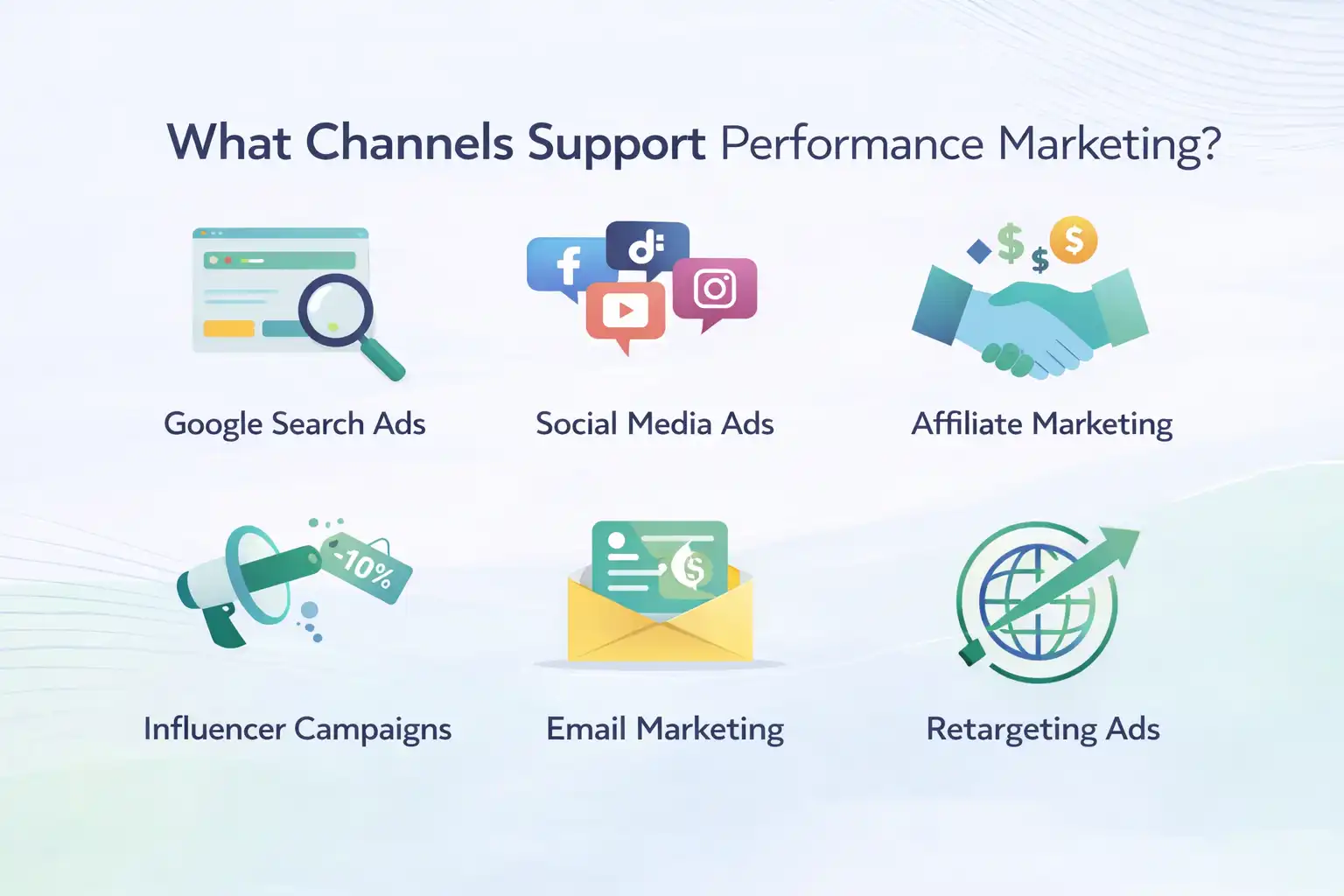
1: Google Search Ads
Google Search Ads reach people who already search for a product or service. Because users show clear intent, these ads often drive strong clicks and conversions.
2: Facebook and Instagram Ads
These platforms help brands reach specific audiences based on interests, behavior, and demographics. Businesses use them to generate leads, sales, and signups through targeted campaigns.
3: TikTok Ads
TikTok allows brands to connect through short video content. Many companies use this channel to test creative ideas and attract attention from younger audiences.
4: Affiliate Marketing
Affiliate marketing stands as one of the strongest forms of performance based marketing. Brands partner with affiliates and pay only when those partners generate sales or qualified leads.
5: Influencer Partnerships
Influencers can support performance campaigns when brands use tracking links or discount codes. This setup allows companies to measure how many conversions each creator drives.
6: Email Marketing
Email campaigns help businesses drive repeat purchases and signups. Marketers track how many users click and convert from each message.
7: Retargeting Ads
Retargeting ads bring back visitors who leave without taking action. These ads focus on people who already showed interest, which often increases conversions.
Each of these channels supports performance marketing because they link budget to measurable actions. That connection gives businesses more control and clearer growth paths.
What Makes Performance Marketing Different From Traditional Marketing?
Both types matter, but they serve different goals.
Here’s a simple comparison:
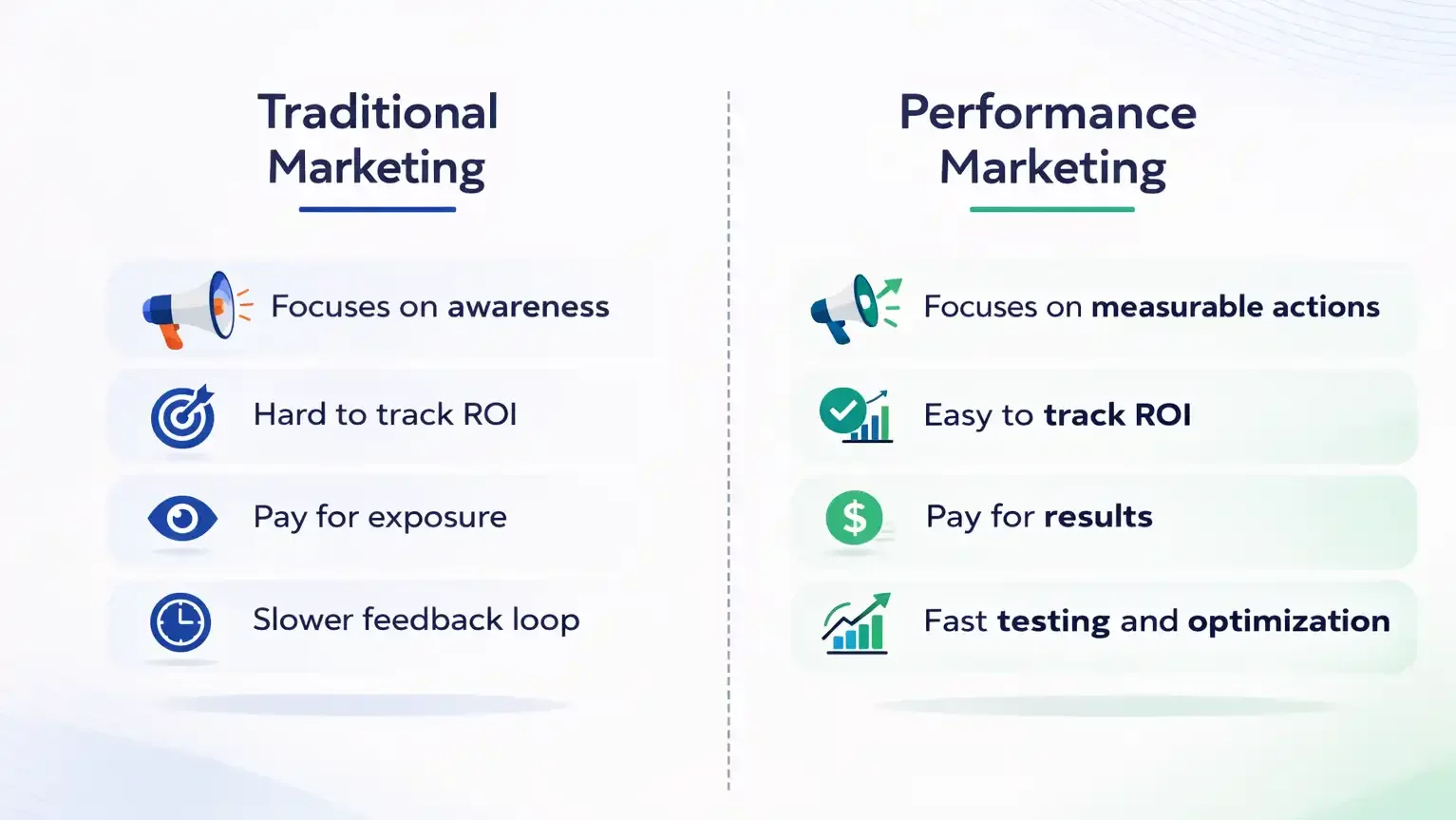
Performance marketing works best when a business wants direct growth and clear reporting.
Who Should Use Performance Marketing?
Performance Marketing fits almost any business that wants measurable results.
It works especially well for:
- Ecommerce stores
- SaaS companies
- Online coaches and service providers
- Local businesses running lead ads
- Startups with limited budgets
If your business needs leads or sales, performance marketing can help.
Should You Hire a Performance Marketing Agency?
Running ads looks simple at first, but scaling takes experience.
A performance marketing agency helps businesses with:
- Campaign setup and strategy
- Audience targeting
- Conversion tracking
- Landing page alignment
- Budget optimization
- Weekly performance reporting
Many companies choose an agency when they want faster growth without building an in house team.
Still, businesses should look for agencies that show:
- Real results
- Clear reporting
- Honest expectations
- Industry experience
Trust matters in performance marketing because data drives everything.
What Are the Key Benefits of Performance Marketing?
Performance marketing gives brands more control than most marketing models.
Key benefits include:
- Clear ROI tracking
- Better budget efficiency
- Faster feedback from campaigns
- Easier scaling once ads work
- Lower risk compared to broad awareness spending
It helps businesses grow with intention, not guesswork.
What Challenges Come With Performance Marketing?
Performance marketing also comes with pressure. Because everything stays measurable, campaigns need constant attention.
Common challenges include:
- Rising ad competition
- Tracking limitations from privacy updates
- Creative fatigue over time
- Platform algorithm changes
Success requires testing, learning, and adjusting often. Performance marketing rewards consistency.
How Do You Succeed in Performance Marketing?
Success in performance marketing comes from strong fundamentals and consistent improvement. Brands that grow focus on clear structure, smart testing, and real data.
A strong approach includes:
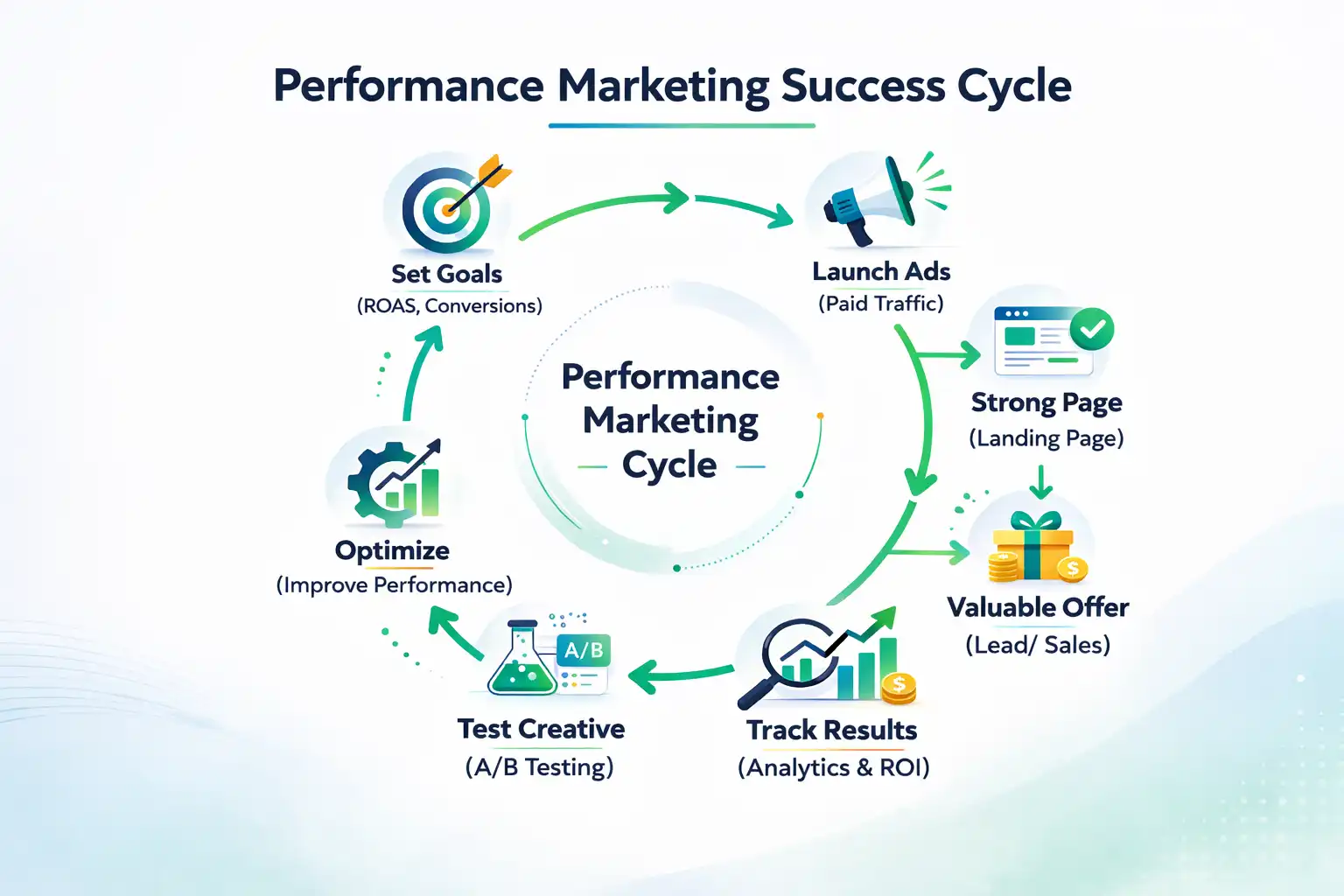
- Set clear goals
Define exactly what you want—sales, leads, bookings, or installs. Clear goals guide every campaign decision. - Build strong landing pages
Make sure the page matches the ad. Keep the message simple and guide visitors toward one clear action. - Create honest, valuable offers
Your product or service must solve a real problem. Strong offers increase trust and conversions. - Track everything accurately
Measure clicks, conversions, and revenue. Good tracking helps you understand what works and what needs to change. - Test creative regularly
Try different headlines, visuals, and messages. Testing reveals what connects with your audience. - Make decisions based on data
Use real numbers to guide budget and strategy. Scale what works. Fix or pause what doesn’t.
Small improvements add up over time. When you refine each part of the system, campaigns grow stronger and more profitable. That steady process makes performance marketing powerful.
Final Thoughts
Performance marketing works best when businesses focus on results they can measure. When spending connects to real leads, sales, and revenue, marketing gains direction. It stops feeling like a gamble and starts working like a system.
Brands that commit to testing and tracking build stronger campaigns over time. They review the numbers, adjust what needs change, and scale what performs well. That steady process builds growth you can sustain.
In a crowded digital space, measurable performance matters. If you want growth that scales, you need marketing that proves its value.

With over 8 years of hands-on experience in Search Engine Optimization (SEO), Zaryab Khan is a seasoned professional dedicated to enhancing online visibility and driving organic growth for businesses worldwide. Holding a Bachelor of Science in Computer Software Engineering from National Textile University, Zaryab combines technical proficiency with strategic insight to deliver measurable SEO results.

At SEOstrategi, we are your growth partners, focused on helping your business succeed with tailored strategies, expert support, and a commitment to increasing visibility, traffic, and conversions in Norway.