


What Is Local Search Engine Optimization?

- ZARYAB
When someone searches for “pizza near me” or “best dentist in Bergen,” Google doesn’t just show any business. It shows the ones that are close, trusted, and match what people are looking for. This process is known as local search engine optimization, or local SEO.
Local SEO helps your business appear when people around you search online. It’s about being visible to the right people, at the right time, in your own area. If someone close by is looking for what you offer, local SEO helps them find you easily.
In this article, we’ll talk about the importance of local search engine optimization for small and local businesses, how it works step by step, and how you can start using it to grow your business in your own city or town.
What Local Search Engine Optimization Means
Local search engine optimization is a simple but powerful marketing strategy. It is a simple way to help people near you find your business. It makes your shop, service, or office appear when someone nearby searches for what you offer.
Unlike regular SEO that reaches people everywhere, local SEO focuses on your neighborhood. It helps nearby customers find you easily, visit your place, call you, or book your service when they need it.
For example:
- A barber in Trondheim wants people in Trondheim to find his shop, not people in London.
- A restaurant in Stavanger wants to appear when users search “best dinner near me.”
Local SEO connects these businesses with customers right around the corner.

Why Local Search Engine Optimization Matters
If your business depends on local customers, like a barber, café, or real estate agent, local search engine optimization is something you can’t ignore. It helps people nearby find you right when they need your service.
Here’s why it matters:
- Most people search locally: Nearly half of all Google searches are for local information. People are always looking for places “near me.”
- Local results establish trust: When your business is on Google Maps or in the local pack, it seems more reliable and trustworthy to searchers.
- It leads to actual customers: Roughly 76% of individuals who search for a local business end up visiting it within a day. That’s speedy action.
- Small businesses can compete: You don’t need a big budget to rank high. Good local SEO helps small shops and local brands beat larger companies in search.
If you want your business to grow in your town or city, you must be visible where your customers are searching, and that’s on Google. Local SEO is how you make sure they find you first.
How Local Search Engine Optimization Works
Local SEO helps inform Google who you are, what you do and where your business is located. It pairs you with people looking for near your location.
When a user enters “plumber near me,” here’s what Google considers to serve up the best ones:
Relevance
Relevance is simply how well your business fits the search. A search of “vegan restaurant” is Google showing a place because they mentioned vegan food in their website, or profile, or posts.
Example:
When people search “vegan café in Oslo” and your café says, “We serve vegan meals in Oslo,” you will have a higher probability of appearing
Proximity
Proximity means location. The closer your business is to the person searching, the higher you show up. That’s why adding your address and city name helps so much.
Example:
If someone searches “dentist near me” in Bergen, Google shows dentists close to that spot, not in another city.
Prominence
Prominence means how well people know and trust your business online. Google checks things like reviews, mentions, and links from other websites.
Example:
A bakery with many good reviews and local mentions ranks higher than one with no online presence.
These three parts work together. They help Google see that your business is a good match, close to the person searching, and trusted by real people.
That’s what makes local search engine optimization so powerful, it helps your business show up right when someone nearby needs what you offer.

The Key Elements of Local SEO
To get local SEO to work in your favor, you need to emphasize some key elements that both Google and customers use to identify you as a trusted local business:
Google Business Profile Optimization
Your Google Business Profile (GBP) is the foundation of your local presence. When someone searches for your business or category, this profile appears with your name, address, phone number, photos, and reviews.
How to optimize your GBP:
- Claim and verify your business on Google.
- Use your real business name and category.
- Add accurate NAP (name, address, phone).
- Include your website and working hours.
- Upload quality photos of your products or space.
- Write a short, friendly business description.
- Post regular updates, offers, or announcements.
When your profile is complete and updated, you’re more likely to appear in Google’s local map, the top three listings with a map that most people click first.
Use of Local Keywords
Local SEO starts with the right words. Local keywords include your product or service plus your location.
Examples:
- “Hairdresser in Oslo city”
- “Real estate agent in Stavanger”
- “Website design for small businesses in Trondheim”
How to use them naturally:
- Add them to your website title and meta description.
- Include them in page headings (H1 or H2).
- Use them in your homepage and service descriptions.
- Add them to image file names and alt text.
- Mention nearby landmarks or neighborhoods in your content.
When you include local terms naturally, you tell Google exactly where you serve customers.
On Page SEO for Local Search
On page SEO makes your website clear, relevant, and easy to navigate.
Checklist for strong local on page SEO:
- Add your address and contact information on all page footers.
- Build a separate “Contact” or “Come Visit Us” page with a map.
- Use schema markup (local business schema) to assist Google in making sense of your info.
- Ensure your site is mobile friendly, most local searches are conducted on mobile devices.
- Ensure your site loads quickly (less than 3 seconds).
- Utilize local keywords in URLs, titles, and headings.
An appropriately optimized website not only enhances ranking but also enables visitors to trust and reach you quicker.
Collecting and Managing Reviews
Reviews are powerful. They build trust and influence buying decisions more than ads ever could.
How to handle reviews wisely:
- Ask satisfied customers to leave feedback on Google.
- Reply politely to both good and bad reviews.
- Avoid fake or paid reviews. Google penalizes that.
- Thank customers for positive comments.
Benefits of good reviews:
- Increase your visibility in Google Maps.
- Improve conversion rates, people believe other customers more than brands.
- Build a long term reputation.
When your business consistently receives positive, genuine reviews, your ranking naturally improves.
Local Citations and Directory Listings
A citation is when another website mentions your business name, address, or phone number. Common examples are Yelp, Facebook, and Yellow Pages.
Steps to strengthen local citations:
- List your business on popular local directories.
- Make sure your NAP details match everywhere.
- Correct any spelling or phone number mistakes.
- Remove duplicate listings.
- Add your business to niche directories related to your field (e.g., TripAdvisor for restaurants).
- Consistency builds Google’s confidence that your business information is real and verified.
Local Link Building
Links from other websites act like votes of trust. For local SEO, the goal is to earn backlinks from local and relevant sources.
Smart ways to build local backlinks:
- Collaborate with local bloggers or influencers.
- Sponsor community events or charities.
- Join local chambers of commerce.
- Write guest posts for nearby businesses.
When other trustworthy local sites link to yours, Google recognizes your business as part of the local network.
Create Local Focused Content
Local content shows Google that your website is relevant to your area. It also helps you connect better with your community.
Ideas for local content:
- Write blogs about local events, news, or stories.
- Share guides like “Top 10 Restaurants in Oslo.”
- Highlight your work with local clients.
- Share testimonials and photos of community involvement.
Good content not only helps SEO but also builds trust and emotional connection with your audience.
Technical SEO and Mobile Experience
Local searches often happen on the go, which means your website must be fast and mobile friendly.
Key technical areas to check:
- Page loading speed.
- Secure connection (HTTPS).
- Easy navigation on phones.
- No broken links or missing pages.
- Clean, modern design.
If your website works smoothly and looks good on any device, users stay longer — and Google rewards that.
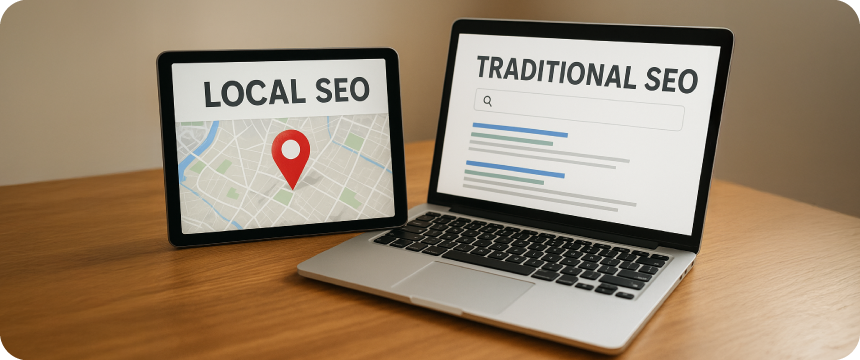
Local SEO vs Traditional SEO
| Feature | Local SEO | Traditional SEO |
| Focus | Specific area or city | Global or national reach |
| Keywords | “Dentist in Oslo” | “Best dentist” |
| Goal | Appear in local searches & Google Maps | Rank for global keywords |
| Audience | Nearby customers | Anyone searching online |
| Results shown | Local map pack + local results | Organic listings |
| Importance of NAP & reviews | Very high | Moderate |
Both types of SEO are important, but if your customers live nearby, local search engine optimization gives faster and more relevant results.
Benefits of Local SEO for Small Businesses
Local SEO is one of the best low cost ways to grow a business. Here’s what you gain:
- More local traffic: You reach people actively searching near you.
- Better conversions: Local searches have strong buying intent.
- Higher credibility: Reviews and ratings boost trust.
- Community presence: You become part of the local online scene.
- Long term growth: Once optimized, local SEO keeps bringing leads.
It’s like digital word of mouth that keeps working for you every day.
Common Mistakes to Avoid in Local SEO
Even small errors can hurt your visibility. Here are some common mistakes:
- Inconsistent business information across directories.
- Ignoring or deleting bad reviews instead of responding.
- Forgetting to add location based keywords.
- Neglecting mobile optimization.
- Choosing the wrong business category in Google Profile.
- Not updating working hours, photos, or contact info.
Avoiding these mistakes can make your local SEO efforts much stronger.
How to Measure Local SEO Success
Tracking performance helps you see what’s working and where to improve.
Important metrics to monitor:
- Google Business Profile insights (views, calls, direction requests).
- Local keyword rankings.
- Click through rate (CTR) from local search results.
- Website traffic from local searches.
- Number of reviews and average ratings.
- Leads or store visits generated from Google Maps.
You can use tools like Google Analytics, Search Console, and BrightLocal to track these numbers over time.

Future of Local Search Engine Optimization
Local SEO keeps changing as technology moves forward. The way people search these days differs significantly from how they searched some years back, and it continues to develop. Voice search, mobile usage, and AI powered results are currently influencing how local businesses are discovered online.
Some of the key trends to watch out for:
Voice Search Optimization
Local services are becoming more commonly found through voice assistants such as Siri, or Google Assistant. They ask naturally occurring questions, like “Where’s the nearest hair salon? or “Who sells pizza in Oslo?” To be on the ball, pick up conversational keywords and phrases that sound like real questions.
AI Powered Search Results
Google uses artificial intelligence to give more personal and accurate local results. The quality and consistency of your online presence will increase your chances of being displayed when a local customer searches for something related to your product/service.
Zero Click Searches
Sometimes, people find what they need right on Google, without even clicking a website. They get answers directly from the map listings, reviews, and business profiles. That’s why your Google Business Profile must be updated and detailed.
Local Video Marketing
Short, engaging videos showing your shop, service, or customer experiences can make a big difference. People connect better when they see real faces and stories from their community.
Businesses that understand and adapt to these changes will stay strong in local search. The future of local SEO is about being visible, trusted, and easy to reach, right where your customers are looking.
Conclusion
Local SEO is not only about getting a higher rank. It’s about helping people in your area find and trust your business. When you stay active and consistent, more local customers visit, and your name becomes known in the community. Keep your business details right, ask happy customers to leave reviews, and share simple posts that fit local needs.
It takes time, but it works. Once your business starts showing up in local results, people begin to see you as part of their neighborhood, a name they know and trust.
Frequently Asked Questions
What is local SEO?
Local SEO helps your business appear when nearby customers search online. It improves your visibility in maps, listings, and search results.
Why do small businesses need local SEO?
Local SEO is important to help small businesses compete with larger brands so that most users search online before ever entering a store.
How can I improve my local SEO quickly?
Ensure your business information is consistent everywhere online, claim your Google Business Profile, include local keywords and build reviews.
Does social media assist with local SEO?
Yes, active local presence on social media builds brand recognition and can result in increased local mentions and backlinks.
How long does it take for it to work?
Generally between 3 to 6 months of consistent effort, depending on competition and consistency.
With over 8 years of hands-on experience in Search Engine Optimization (SEO), Zaryab Khan is a seasoned professional dedicated to enhancing online visibility and driving organic growth for businesses worldwide. Holding a Bachelor of Science in Computer Software Engineering from National Textile University, Zaryab combines technical proficiency with strategic insight to deliver measurable SEO results.

At SEOstrategi, we are your growth partners, focused on helping your business succeed with tailored strategies, expert support, and a commitment to increasing visibility, traffic, and conversions in Norway.